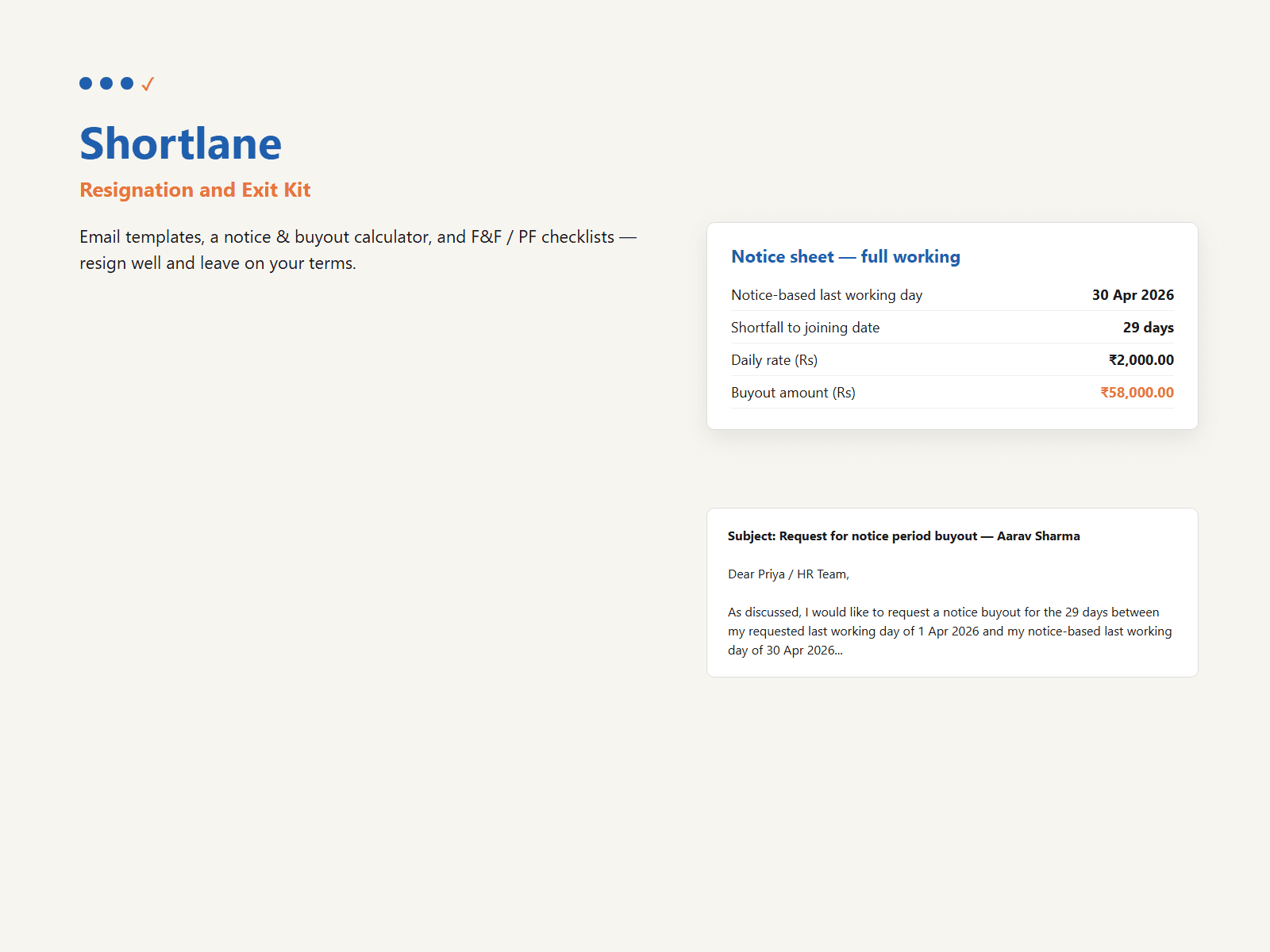
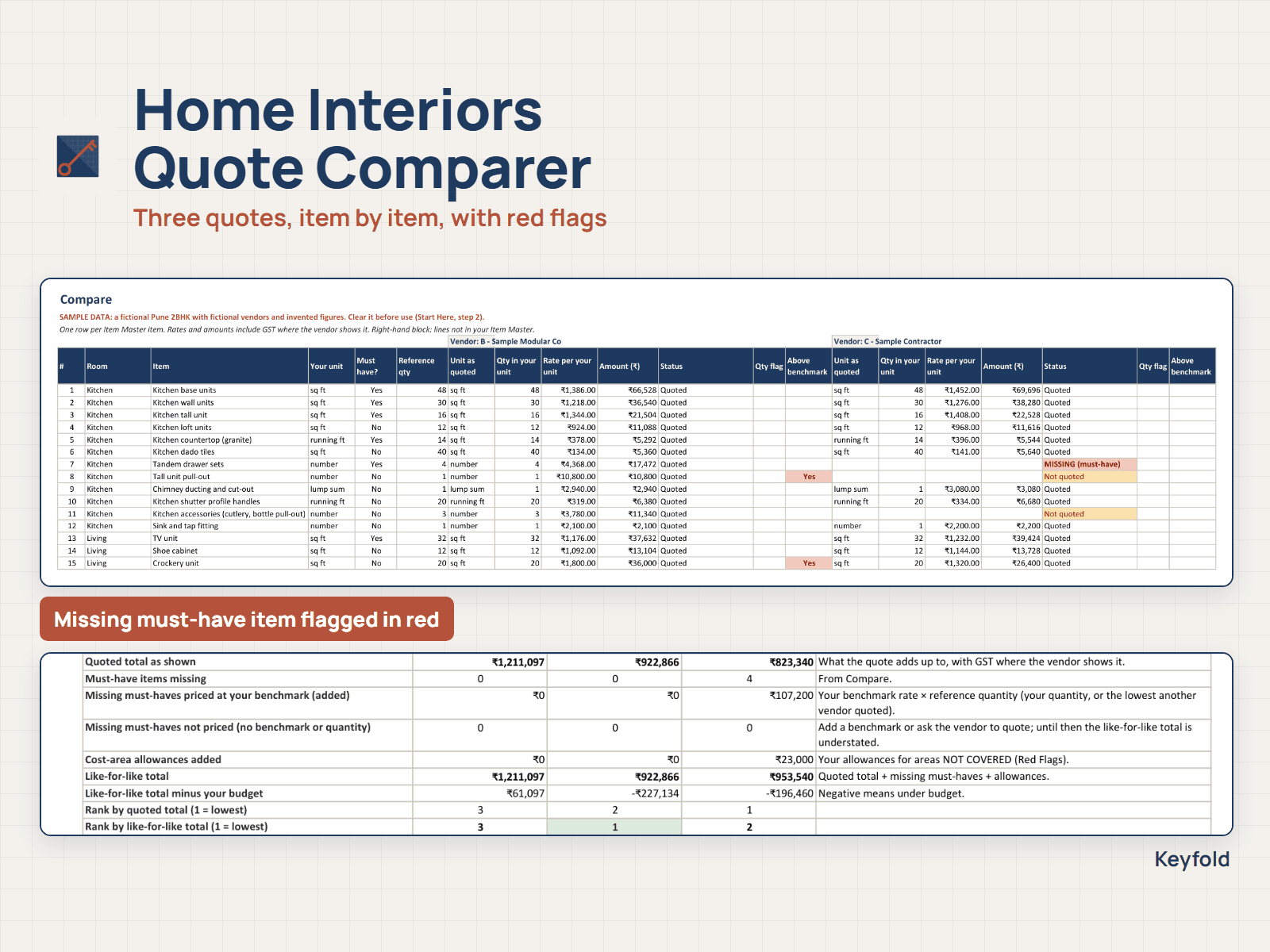
Compare up to four job offers on real monthly in-hand pay, not just headline CTC — with the cost of a joining-bonus clawback, a service bond or a notice-period buyout priced in.
What's inside
Job-Offer-Comparer-v1.0.xlsx: 10 sheets (Start Here, Single CTC, Offers, In-Hand, Wages Check, First Year, Risk, Compare, Rates, Tests) with a fictional 3-offer sample, labelled SAMPLEJob-Offer-Comparer-Guide.pdf: a 12-page guide with worked examples for the tax slabs, marginal relief, and clawback/bond math
How to use it
- On Single CTC, enter one offer's CTC in Quick mode, or your own breakup.
- On Offers, enter up to four offers side by side — pay components, PF basis, state, variable pay, joining bonus, service bond and notice period.
- Check In-Hand for the full working, Risk for what leaving early would cost at 6/12/18/24 months, and Compare for the full picture with your own weighted score.
Requirements
- Microsoft Excel 2010 or later. The workbook uses only functions Google Sheets also supports (it opens and calculates correctly there, though a few array formulas are easiest to check in Excel).
Good to know
- Built for the new tax regime only (Income-tax Act 2025, tax year 2026-27); the old regime, HRA exemption claims and non-salary income are out of scope.
- Professional tax is verified for six states (Maharashtra, Karnataka, West Bengal, Telangana, Gujarat and Tamil Nadu); other states show ₹0 and a flag, never a guess. Maharashtra has a separate "woman" option for its PT exemption up to ₹25,000/month. West Bengal's confirmed 1 October 2026 schedule change is applied automatically on Offers using each offer's start date; Single CTC always uses the current (pre-change) schedule.
- Employer contributions to PF, NPS and superannuation above ₹7.5 lakh/year in total can become a taxable perquisite; this workbook always treats employer PF and gratuity as fully non-cash and non-taxable, which will rarely matter at fresher and early-career salaries.